Dental Implants in Lucknow
A fixed option for replacing missing teeth, planned around your bone, gums and health.
What Are Dental Implants?
If you are missing one or more teeth, a dental implant may be one of the options worth discussing. At ESD Dental Clinic on Jopling Road, Hazratganj, implant treatment begins with an examination and a clear plan — including cost — before any procedure is agreed.
A dental implant is a small titanium post placed in the jaw to take the place of a missing tooth root. Once the post has healed and become stable, it supports a replacement — a single crown, a bridge, or a denture — so the new tooth is anchored in the jaw rather than resting on the gums or attached to neighbouring teeth.
Because of this, an implant-supported tooth generally does not require the teeth beside the gap to be reduced, as a conventional bridge does. Implants are one of several ways to replace missing teeth, alongside bridges and dentures, and they may be considered depending on your oral health, bone condition and overall suitability. Your dentist can explain how each option compares for your situation.
Who May Consider Dental Implants?

Implants are commonly discussed with people who have:
Lost a single tooth to decay, infection or injury.
Several missing teeth.
Dentures or bridges they find uncomfortable, or would prefer to replace with something fixed.
Whether an implant is right for you depends on an individual assessment — the health of your gums, how much bone is available, your oral hygiene, your general health and what you are hoping to achieve. Having a missing tooth does not automatically mean an implant is the best or only option. In some cases another treatment may suit you better, and we will say so.
Assessment and Treatment Planning
Implant treatment is planned before it is carried out. A first consultation typically includes:
A clinical examination
Of your teeth, gums and bite.
A review of your general health
Including any conditions or medicines your dentist should know about.
Imaging where clinically appropriate
To assess the bone available for an implant and the position of nearby structures.
A discussion of your options
Including whether an implant is suitable, what the restoration would involve, and any alternatives.
You then receive a written, itemised treatment plan showing what is proposed and what it costs, so you can decide in your own time.
The Dental Implant Treatment Process
Every case is different, so the number of visits and the time between them vary. The steps below describe the general sequence.
Consultation and examination
Your dentist examines your mouth, reviews your health history and talks through what you would like to achieve.
Imaging and treatment planning
Where appropriate, imaging is used to assess the bone and plan where an implant could be placed. You are shown the plan and the cost before anything begins.
Implant placement
The implant is placed in the jaw in a clinical procedure, usually under local anaesthesia. Your dentist explains beforehand what will be done and what you may feel.
Healing and integration
The implant needs time to settle and become stable in the bone before it takes its full load. How long this takes varies from person to person.
Fitting the final tooth
Once the implant is ready, the replacement tooth — a crown, bridge or denture — is made and fitted. Getting the fit, bite and appearance right can take more than one appointment.
Review and maintenance
Follow-up visits check that the implant and surrounding gum are healthy, and you are shown how to keep them clean.
Replacing a Single Missing Tooth

When one tooth is missing, an implant with a crown is one of the ways it can be replaced. The implant takes the place of the root and the crown is shaped and shaded to blend with the teeth around it.
Before recommending this, your dentist will check the surrounding teeth and gums, the space available and the bone at the site. The aim is a replacement that is comfortable and functional and looks natural, though the final appearance depends on each person’s teeth, gums and bite, and cannot be promised in advance.
When Several Teeth Are Missing
Where more than one tooth is missing, implants can be used to support a bridge or a set of teeth without needing an implant for every missing tooth. The number and position of implants depends on the teeth being replaced, the bone available and how the teeth will bite together.
If you need treatment across the whole mouth — for example, extensive tooth loss combined with gum or bite problems — a wider plan may be needed.
Why Bone and Gum Health Matter
An implant relies on healthy bone to hold it and healthy gums around it. That is why assessment comes first.
Bone
Enough bone, in the right place, gives an implant stable support. Bone can reduce over time after a tooth is lost, so how long a tooth has been missing can matter.
Gums
Gum disease around an implant can affect it in the same way it affects natural teeth. Existing gum problems are usually treated before implant treatment is considered.
Other conditions
Certain health conditions, smoking and poor oral hygiene can affect healing and long-term results, so your dentist will discuss them with you.
Additional procedures may sometimes be considered in selected cases. Your dentist can explain whether any are relevant to your treatment plan.
Comfort, Recovery and Aftercare
Implant placement is a clinical procedure. Local anaesthesia is usually used so the area is numb while the implant is placed, and your dentist will explain beforehand what to expect. Some soreness, swelling or tenderness around the area is common for a period afterwards, and recovery varies from patient to patient.
- Follow the instructions your dentist gives you, including any advice on eating and activity.
- Keep the area clean in the way you are shown.
- Attend your follow-up appointments.
- Contact the clinic if you notice anything unexpected — increasing pain, persistent swelling, bleeding that does not settle, or a loose or uncomfortable implant or crown.

What Affects the Cost of Dental Implants?
The cost of implant treatment is different for every patient, which is why we do not publish a single price. The main factors are:
- How many teeth are being replaced, and how many implants are needed to support them.
- The type of replacement — a single crown, a bridge or a denture.
- The condition of your bone and gums, and whether any additional treatment is needed first.
- Imaging and planning required for your case.
- The complexity of the case, including the position of the teeth and the number of stages.
An examination is needed before an accurate estimate can be given. After it, you receive a written, itemised plan so you can see what each part of the treatment costs before you decide.
Caring for Your Implant Long Term
An implant cannot decay, but the gum and bone around it can still be affected by plaque and gum disease, so it needs regular care.
- Clean daily, brushing twice a day and cleaning between teeth and around the implant as you are shown.
- Have regular check-ups, so the gum, bone and restoration can be checked.
- Tell your dentist if something feels different, such as looseness, tenderness or bleeding around the implant.
- Avoid habits your dentist warns against, such as smoking, which can affect healing and gum health.
How long an implant lasts depends on many factors, including gum health, oral hygiene, bite forces and regular maintenance. No implant can be guaranteed for a fixed period.
Why Consider ESD for Implant Treatment?
A practice with a track record
ESD Dental Clinic has been treating patients on Jopling Road in Hazratganj since 2011.
Dentists with implantology training
Several of our dentists hold implantology qualifications, listed in full on their profiles.
Other specialties in the same clinic
If your plan involves gum treatment, crowns or orthodontics alongside implants, those areas are available here.
Planning before treatment
You see the proposed plan and its cost before you agree to go ahead.
Dental Implant FAQs
A dental implant is a small titanium post placed in the jaw to replace a missing tooth root. Once healed, it supports a crown, bridge or denture.
Book an Implant Consultation
Not sure whether an implant is right for you? A consultation is the place to find out. We will examine your mouth, explain your options — including alternatives — and give you a written plan with costs so you can take your time to decide.
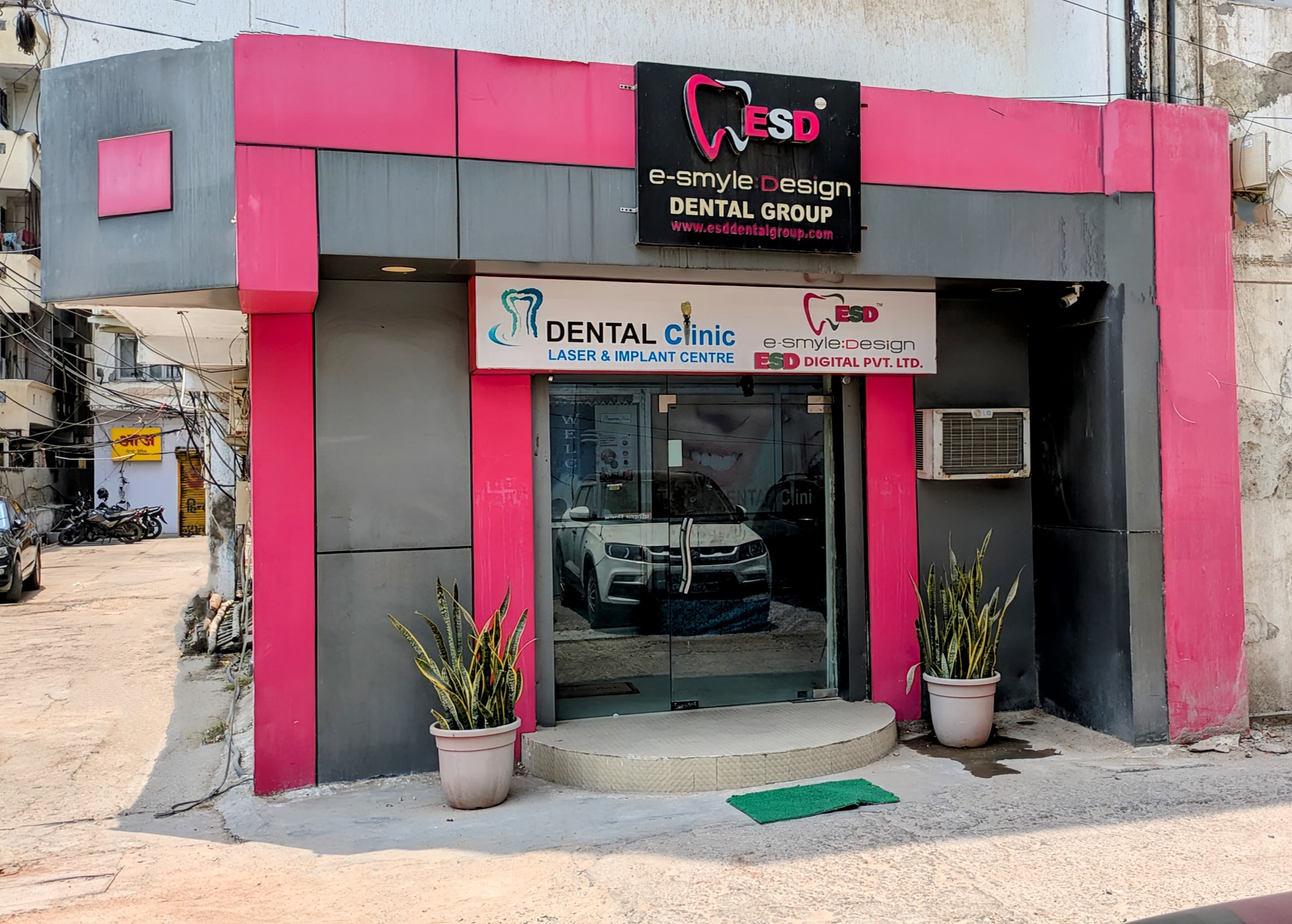
ESD Dental Clinic, Ground Floor, B Block, Surajdeep Complex, 1-Jopling Road, near Aaj Press, Hazratganj, Lucknow – 226001.
Request an Appointment
Tell us what you need and our care team will call you back to confirm a time. We never share your details.
- An examination first — we look before we recommend anything.
- A written, itemised plan with the cost, before you decide.
- Treatment in planned stages, with a review afterwards.
Other Treatments
Ready to book your visit?
An examination, a written treatment plan and the prices that go with it — before you decide anything.